
Shares of SK Telecom vaulted to $43.00 in extended trading — up 8.5% from the prior close of $39.64 — after the South Korean telecom giant announced a gigawatt-scale AI cloud infrastructure project with NVIDIA and formally joined NVIDIA's Cloud Partner program. The move halts a bruising slide that saw the stock drop from $46.00 on June 2 to $37.44 by June 5, erasing roughly 18% in three sessions. Investors are now betting this partnership reshapes what has long been valued as a stodgy telecom utility. SK Telecom Lands a Blockbuster NVIDIA Cloud Deal — But Can a Phone Company Really Compete in AI Infrastructure?
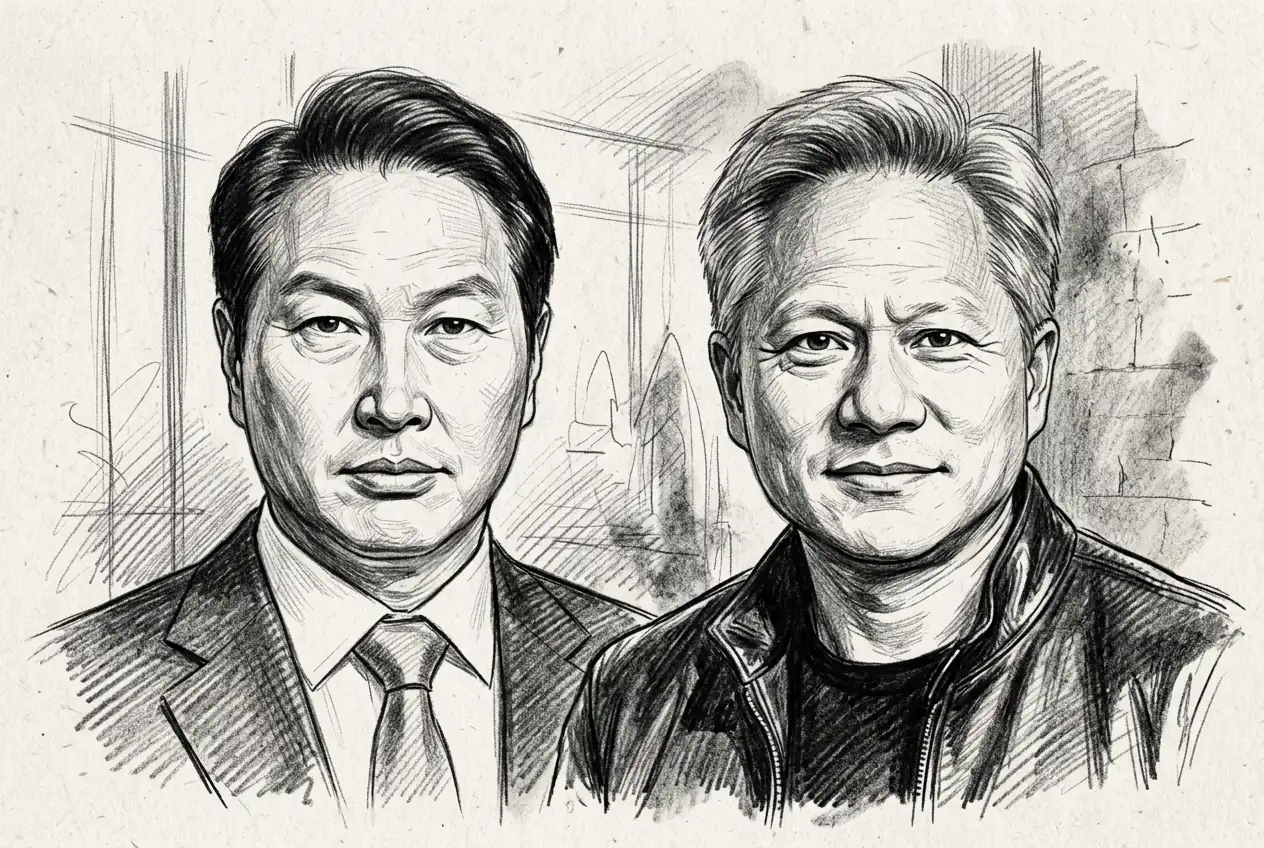
Shares of SK Telecom (SKM) spiked 8.5% to $43.00 in extended trading after the company announced it will build a gigawatt-scale AI cloud in South Korea with NVIDIA, with the first dedicated computing facility targeting a 2027 launch. SK Group Chairman Chey Tae-won and NVIDIA CEO Jensen Huang appeared jointly in Seoul, elevating what was previously a chip-supply relationship through SK hynix into a group-wide infrastructure partnership. The stock had fallen roughly 19% from $46.00 to $37.44 in just three sessions before the announcement sparked a sharp reversal.
A Telecom Wants to Sell Computing Power, Not Just Phone Plans. Unlike conventional cloud providers offering general-purpose services, this AI cloud would specialize in GPU-based computing tailored for AI workloads — training models, running them, and powering autonomous software agents. For a company generating trailing twelve-month revenue of $12.15 billion almost entirely from wireless and broadband subscriptions, this is an attempt to open a fundamentally different, higher-margin revenue stream. The question is whether enterprise customers will choose a telecom's cloud over hyperscalers like AWS and Microsoft Azure.
NVIDIA's Stamp of Approval Matters More Than the Hardware. SK Telecom will join NVIDIA's Cloud Partner program, gaining access to NVIDIA's latest AI infrastructure, software, and developer ecosystem. That designation gives SK Telecom a credibility shortcut — signaling to Korean enterprises and government agencies that its AI services carry NVIDIA's performance benchmarks. Jensen Huang framed telecoms as "national AI infrastructure," arguing they "can become the backbone of new AI clouds."
The Bet Is Huge, but Revenue Is Years Away. SK Telecom itself clarified the project envisions a phased expansion rather than an immediate gigawatt-scale deployment, framing the build-out as gradual and scalable. Gigawatt-scale data centers cost billions of dollars, and the first facility won't open until 2027. With a market capitalization around $14 billion , the capital commitment could be material. Investors bidding the stock up are pricing in a transformation story — not near-term earnings.
Korea's AI Ambitions Give SKT a Home-Court Advantage. South Korea is one of the world's most advanced pro-AI industrial economies, with leading companies in semiconductors, memory, robotics, and manufacturing — sectors rapidly moving AI into production. Sovereign AI demand — governments wanting computing power kept on domestic soil — gives SKT a built-in customer base that foreign hyperscalers can't easily claim. Whether that's enough to justify a sustained premium over telecom peers is the open bet shareholders are now making.