
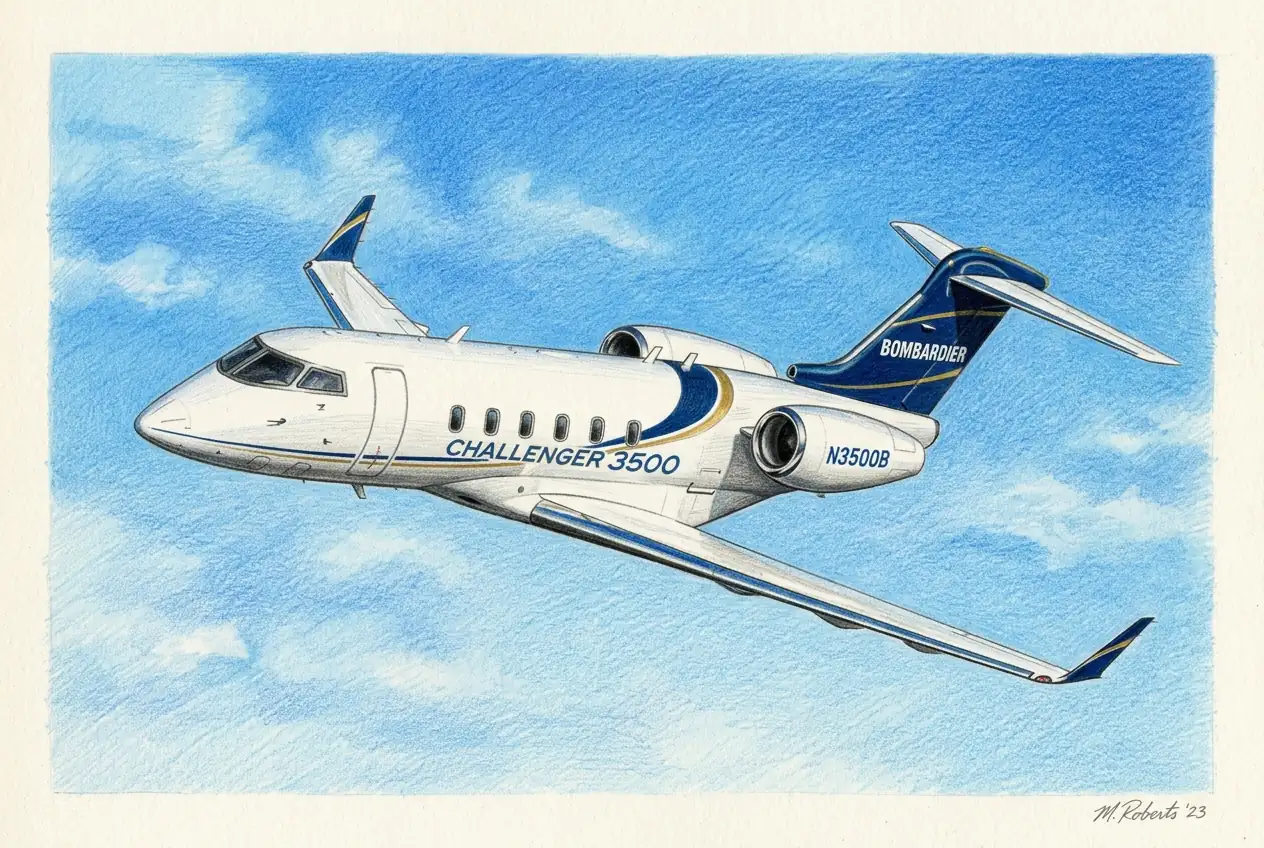
Shares of Bombardier plummeted 6.4% to CA$295.01 on September 8 after President Trump posted on Truth Social demanding the Canadian jet maker be barred from selling aircraft in the United States unless it moves production onto American soil. The threat came as Canada-U.S. trade talks collapsed on August 21 and Trump's administration unleashed a barrage of tariffs, threats and personal attacks.
Canada imposed counter-tariffs on $27.6 billion worth of American goods on Tuesday. For Bombardier shareholders, the timing is brutal: the company just completed a multi-year turnaround and was hitting its stride.
- Half of Bombardier's Business Sits in Trump's Crosshairs. Analysts forecast the company's full-year 2026 revenue at approximately US$10.2 billion, and Trump's own claim that more than 50% of Bombardier's sales originate in the United States implies a U.S. market ban could put roughly $5 billion in annual revenue at risk.
U.S. fractional and charter operators fly Bombardier jets in bulk — NetJets, Flexjet, Airshare and Wheels Up all operate Challenger aircraft, and NetJets holds one of the largest orders on the books. A sales ban, even partial, would crater the company's $21.8 billion backlog.
- No Formal Order Exists — Yet. No executive order, tariff schedule or regulatory action accompanied the statement.
Trump made a similar threat in January — decertification plus 50% tariffs — but never followed through.
Bombardier shares fell about 9% after those January posts before recovering. The pattern: big headline shock, uncertain enforcement, lingering risk premium baked into the stock.
- Bombardier Already Employs Thousands on U.S. Soil. Sen. Jerry Moran, R-Kan., whose state hosts Bombardier's U.S. headquarters, objected within hours.
Moran wants Bombardier's Kansas manufacturing operations protected and expanded; the company employs about 3,500 people in and around Wichita. Bombardier noted that many components, including the wings, are produced in the U.S. and its supply chain relies heavily on American companies. A ban would hurt American workers and suppliers first — a politically awkward outcome ahead of midterms.
- A Taiwan Deal Shows the Real Supply Chain Strategy. On September 7, Bombardier formalized a 20-year partnership with Taiwan's AIDC to supply cockpit and forward fuselage structural components for the Challenger 3500.
AIDC expects to deliver components for at least 500 fuselages over that span. The deal diversifies Bombardier's sourcing — sensible long-term planning, but it underscores that full U.S. production is neither imminent nor economically viable.
The bottom line: Bombardier's financials are the best they've been in a decade — 2025 revenue hit about $9.6 billion, free cash flow reached ~$1.07 billion, and net leverage fell to 1.9x. The threat is not new policy; it is a social media post with no legal mechanism behind it. But uncertainty itself is the tax — and until the trade war with Canada resolves, shareholders will keep paying it.