
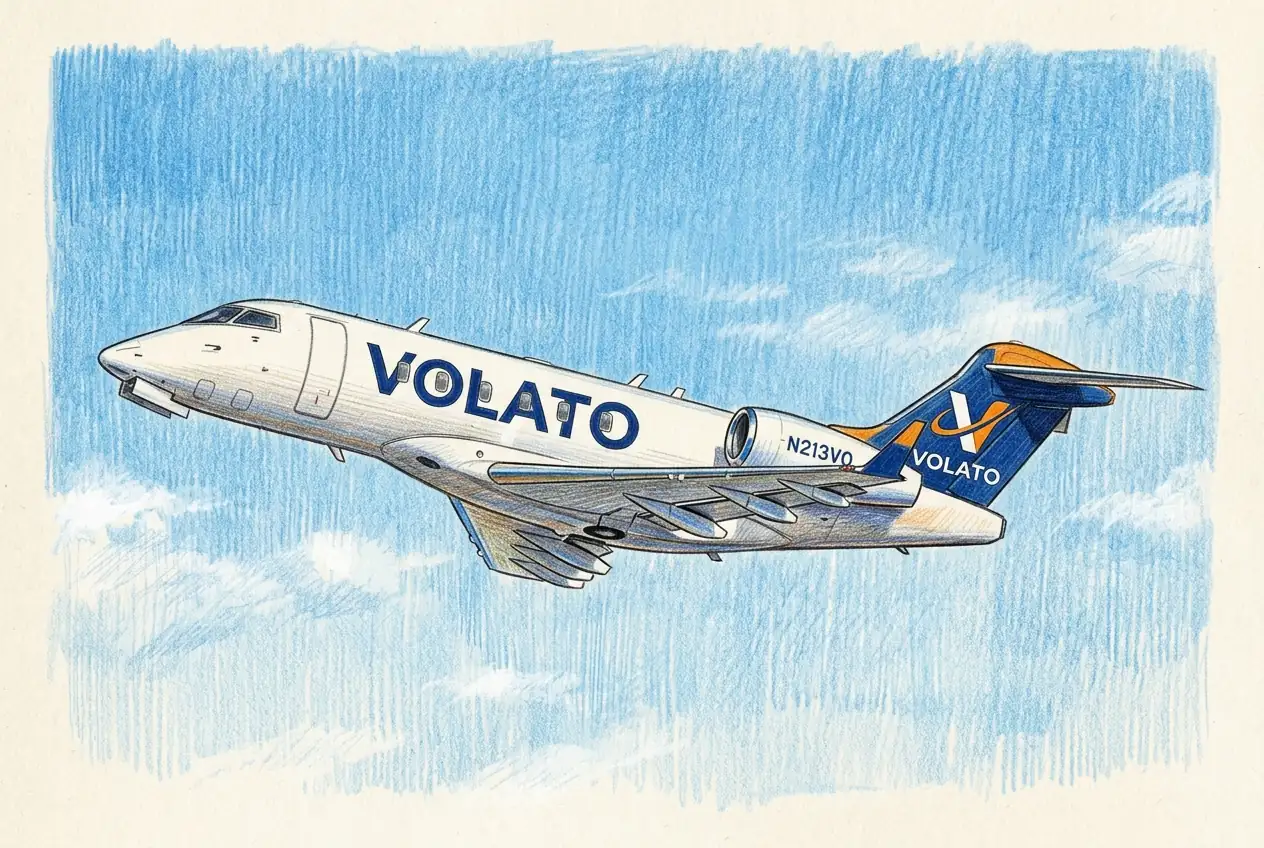
Shares of Volato Group (SOAR) slid 8.3% to $0.15 after the company announced a $1.82 million registered direct offering priced at $0.165 per share — a discount to the prior close of $0.17. This marks the second dilutive capital raise in a single month for a micro-cap that already trades near its all-time low, raising sharp questions about how much runway the company actually has.
Two Fundraises in Three Weeks Signal Desperation, Not Strategy. Just weeks ago, Volato closed a private placement of 6.5 million shares at $0.34 per share, raising roughly $2.21 million from investors led by Catheter Precision (VTAK). Now the company is back for more money — at half the per-share price. Shares outstanding stood at roughly 32.8 million as of June 16. The new offering adds approximately 11 million shares, diluting existing holders by about a third. For a company with a market cap of barely $5 million , repeated sub-market offerings erode investor trust fast.
The Cash Cushion Looks Thin Despite the PR Spin. Volato reported pro-forma cash of $5.5 million on March 31, 2026, or $0.14 per share. But last-quarter net income was negative $2.63 million , meaning the company was burning through cash at a rate that could exhaust reserves within two to three quarters. The combined ~$4 million raised in June buys time, but not much — especially with only 13 employees and revenue that dropped 96% quarter-over-quarter as the legacy aviation business winds down.
A Compliance Clock Is Ticking in the Background. NYSE Regulation accepted Volato's plan to regain compliance with listing standards, but the company has only until December 17, 2026 to meet those requirements — and failure could trigger delisting proceedings. Repeated dilutive offerings at rock-bottom prices may shore up equity on paper, but they simultaneously destroy the share price, making the compliance math self-defeating.
The AI Pivot Needs Revenue, Not Just Press Releases. Volato says the investment supports a "renewed focus on artificial intelligence, including the evaluation of potential acquisition and merger opportunities."
Its aviation software platform reached $4 million in annual recurring revenue (subscription income) as of May 2026, up 221% year-over-year. That growth is real — but $4 million in software revenue cannot sustain a public company that is losing millions per quarter and diluting shareholders every few weeks. Until a transformative deal closes, these capital raises look more like survival funding than strategic investment.