
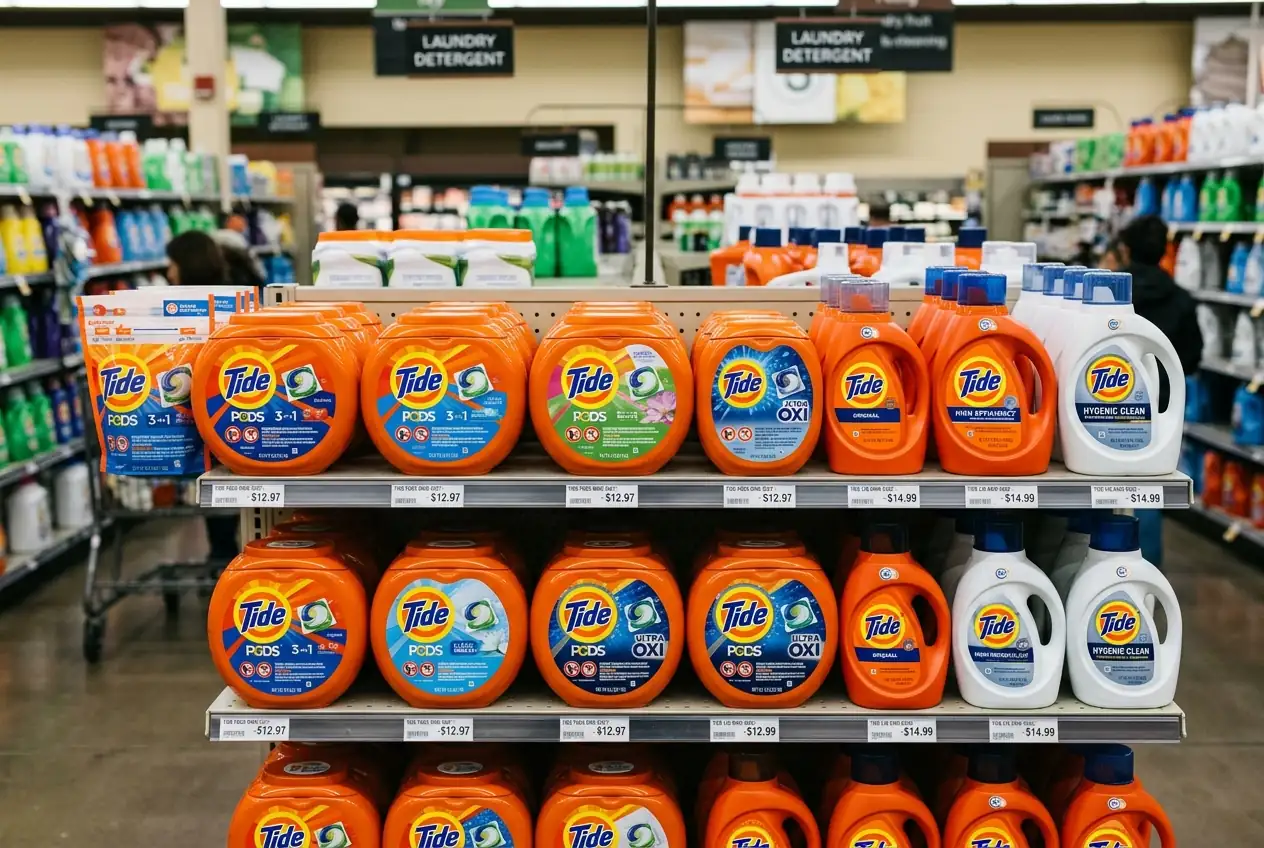
Shares of Procter & Gamble surged 5.6% to $165.58 on Thursday — defying a weaker broad market — after the maker of Tide and Gillette delivered a fiscal first-quarter earnings beat that caught Wall Street off guard. Non-GAAP EPS of $2.00 surpassed estimates by $0.11, and revenues of $23.28 billion topped forecasts by $460 million. For a stock that typically moves about 2.6% on earnings day, the reaction signals genuine surprise.
- Shoppers Are Buying More, Not Just Paying More. The most important number in the report isn't earnings — it's volume. P&G reported volume growth of 2.4%, a strong start to its new fiscal year; in fiscal 2026, the company reported just one quarter of volume growth. That distinction matters because price hikes eventually hit a ceiling, while volume gains suggest real demand. The fabric and home care division, home to Tide and Febreze, led with 4.3% volume growth.
Greater China contributed 8% growth , a notable reversal from recent softness in that market.
-
A $1.4 Billion Headwind Looms Over the Rest of the Year. P&G now expects roughly $1.4 billion in after-tax commodity cost headwinds from raw materials, energy, and transportation, plus another $500 million from higher interest expense, lower non-operating income, and currency — totaling $0.79 per share, or an 11% drag on core EPS growth. That cost wall explains why management maintained — rather than raised — its full-year earnings guidance. Core EPS is still projected at $6.89 to $7.11, implying only 0% to 3% growth.
-
Thorne Adds Revenue but Not Yet Profits. P&G paid $3.8 billion in cash for supplement brand Thorne, which had annual revenue above $500 million.
The deal, which closed October 1, prompted the company to raise its all-in sales growth guidance to 2% to 4%. But the acquisition dilutes margins in the near term and ventures P&G into a crowded wellness market where brand loyalty is fickle.
- The Stock Is Cheaper Than It Looks — For Now. P&G trades at a trailing price-to-earnings ratio of roughly 23.7x, below its five-year median of 25.5x. The discount reflects last year's sluggish growth. If volume gains hold, the valuation gap could narrow. But with the company absorbing a near-record cost headwind while integrating a major acquisition, the margin of safety is thinner than the headline beat suggests. Management plans to return roughly $15 billion to shareholders this fiscal year through dividends and buybacks — a floor under the stock, but not a substitute for sustained organic growth.