
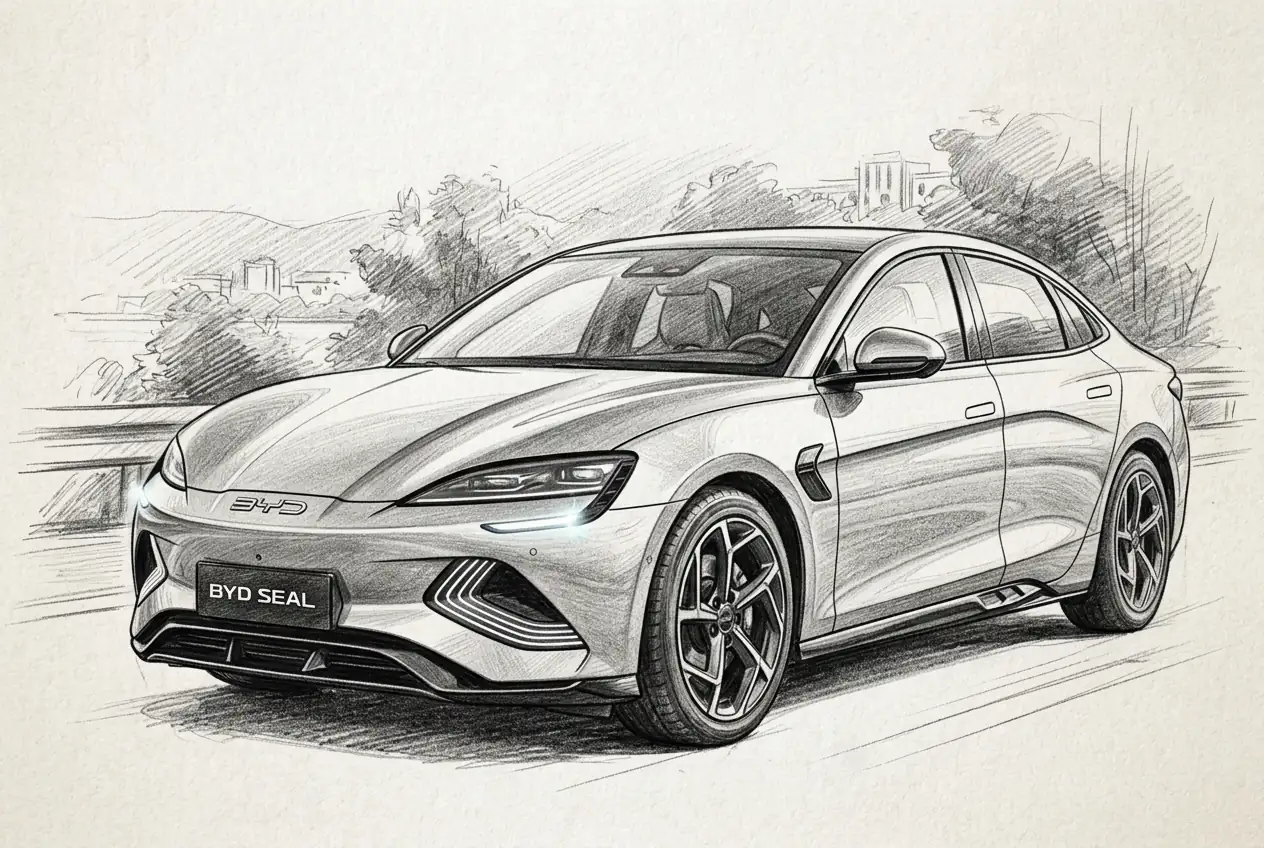
Shares of BYD plunged 9% to $80.07 in after-hours trading as proposed European Union duties on Chinese-made hybrid vehicles threatened to choke off one of the company's most critical growth corridors, compounding pressure from a bruising price war at home. Europe Was BYD's Escape Hatch From China's Price War — Now the EU Wants to Slam It Shut
Shares of BYD cratered 9% to $80.07 after hours as the European Union moved to close the tariff loophole that has powered the Chinese automaker's explosive overseas growth. The selloff reflects a market suddenly recalculating the value of BYD's most profitable growth engine.
Hybrids Were the Workaround — and Brussels Noticed
After EU tariffs hit Chinese battery electric vehicles, imports of Chinese plug-in hybrids surged almost 900% in early 2025. BYD led the charge: the Shenzhen-based automaker has been "the most aggressive," flooding European showrooms with multiple hybrid SUVs and sedans.
Now, according to Germany's Handelsblatt, the European Commission has already prepared an anti-subsidy investigation into Chinese plug-in hybrids and can move quickly once member states approve. For shareholders, this directly threatens the product category driving BYD's European momentum.
Overseas Profits Were Offsetting a Domestic Bloodbath
BYD's exports carry roughly six times the profit margins of domestic sales. That matters enormously because BYD posted its eighth consecutive month of year-over-year domestic sales declines in April, down 15.5%.
Average discounts on BYD vehicles hit a record 10% in March 2026 amid a price war that CEO Wang Chuanfu himself called a "brutal knockout stage." BYD raised its 2026 overseas sales target to 1.5 million units — but new European duties on hybrids would squeeze the highest-margin part of that plan.
The Numbers at Stake Are Huge and Growing Fast
Overseas sales in May exceeded 160,000 vehicles, an 80% jump year-over-year , with international markets accounting for over 41% of total sales. In Europe specifically, Chinese EV market share has risen to roughly 10% in Q1 2026, with BYD commanding about 7%.
Analysts estimate EV sales outside China generate up to $3,500 profit per car — up to four times domestic levels. Slapping duties on hybrids could force BYD to either absorb costs or raise prices, eroding the value proposition that fueled a 179% jump in EU registrations.
A Factory in Hungary May Not Be Enough
BYD began trial production at its first European factory in Szeged, Hungary, in January, with full production expected in Q2 2026. Local manufacturing could eventually sidestep import duties — but none of these facilities have yet reached full production scale. The timing gap leaves BYD exposed for at least the next 12–18 months, precisely when its domestic business needs overseas profits most.