
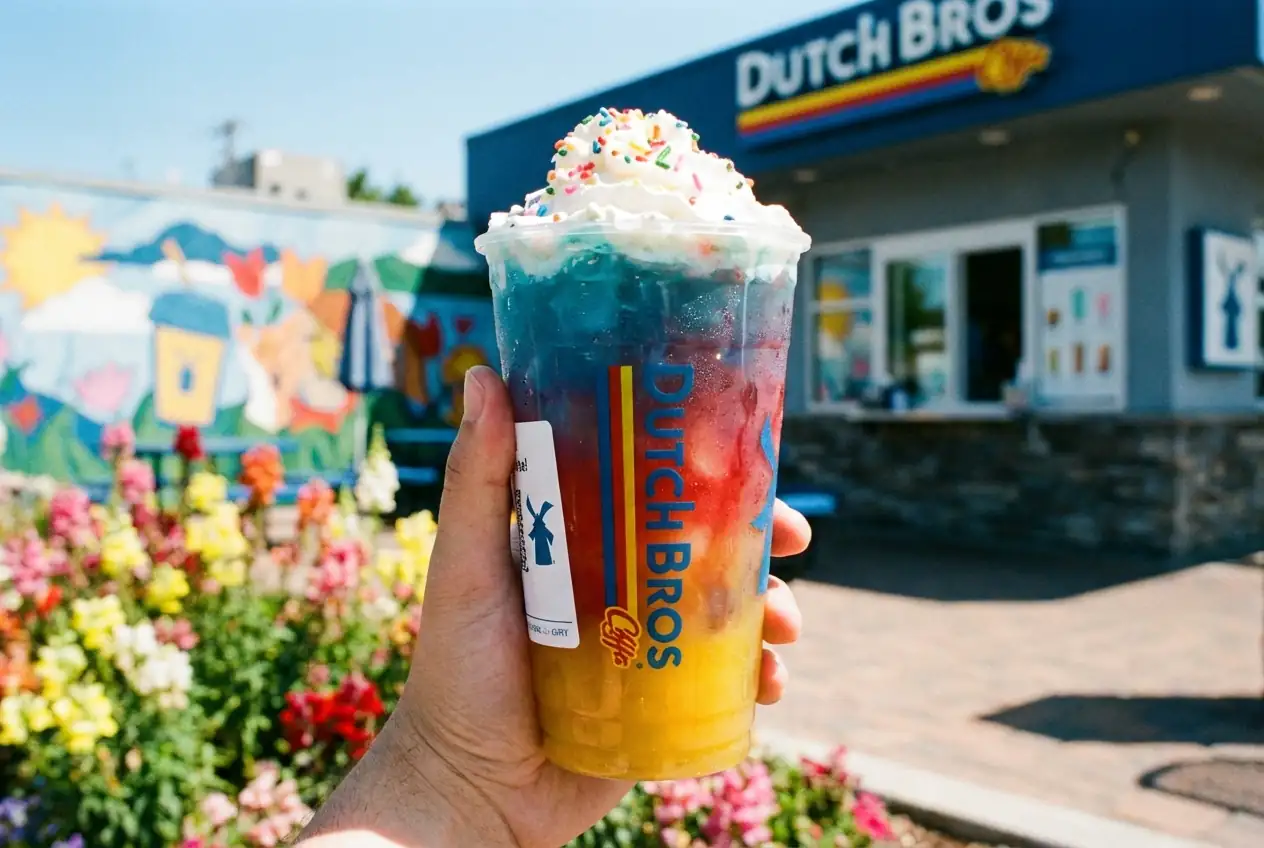
Shares shifted sharply as Dutch Bros investors gave back yesterday's earnings-fueled rally and then some, with the stock sliding to $56.08 pre-market — a ~5% drop from the prior close of $59.06 — despite a Q1 report that beat on revenue, same-store sales, and operating profit. The pullback raises a pointed question: can a coffee chain growing at 31% a year justify a stock price that already bakes in perfection?
Revenue Crushed Expectations, But Profit Margins Tell a Different Story. Q1 revenue hit $464.4M, topping analysts' $449.9M estimate by 3.2%.
Adjusted EBITDA — essentially core operating cash flow — came in at $79.4M, beating expectations by 7.2%. Yet EBITDA margin compressed to 17.1% from 19.1% two years earlier, reflecting rising operational costs despite strong top-line growth.
CFO Josh Guenser warned of "approximately 60 basis points of total COGS pressure" in 2026 from elevated coffee bean prices, meaning rising costs will keep eating into profits even as sales surge.
Customers Keep Showing Up — That's the Bright Spot. Systemwide same-shop sales grew 8.3% — the highest quarterly rate since Q1 2024.
Company-operated locations were even stronger at 10.6%, driven by a 6.9% jump in transactions, marking seven straight quarters of customer traffic gains.
Crucially, the chain has shifted strategy toward driving volume rather than aggressive pricing — a healthier model for long-term loyalty.
Raised Guidance May Not Be Enough for a Stock Priced at 92x Earnings. Dutch Bros raised its full-year revenue outlook to $2.05B–$2.08B and plans at least 185 new shop openings.
But same-shop sales guidance of 4%–6% for the full year signals management expects a cooldown from Q1's pace.
At a P/E ratio of roughly 92 and a beta of 2.41 — meaning the stock swings roughly 2.4 times as much as the broader market — any hint of deceleration gets punished fast.
The Road to 2,029 Shops Faces Real-World Cost Hurdles. Management reiterated its target of 2,029 locations by 2029 , up from 1,177 across 25 states today.
But rising costs in beverages, food, packaging, and new lease models for expansion locations are pressuring margins. The stock's post-earnings fade suggests the market wants proof that this ambitious buildout can deliver profit growth — not just more stores.
Bottom line: The operations are firing. The valuation already assumed they would be.