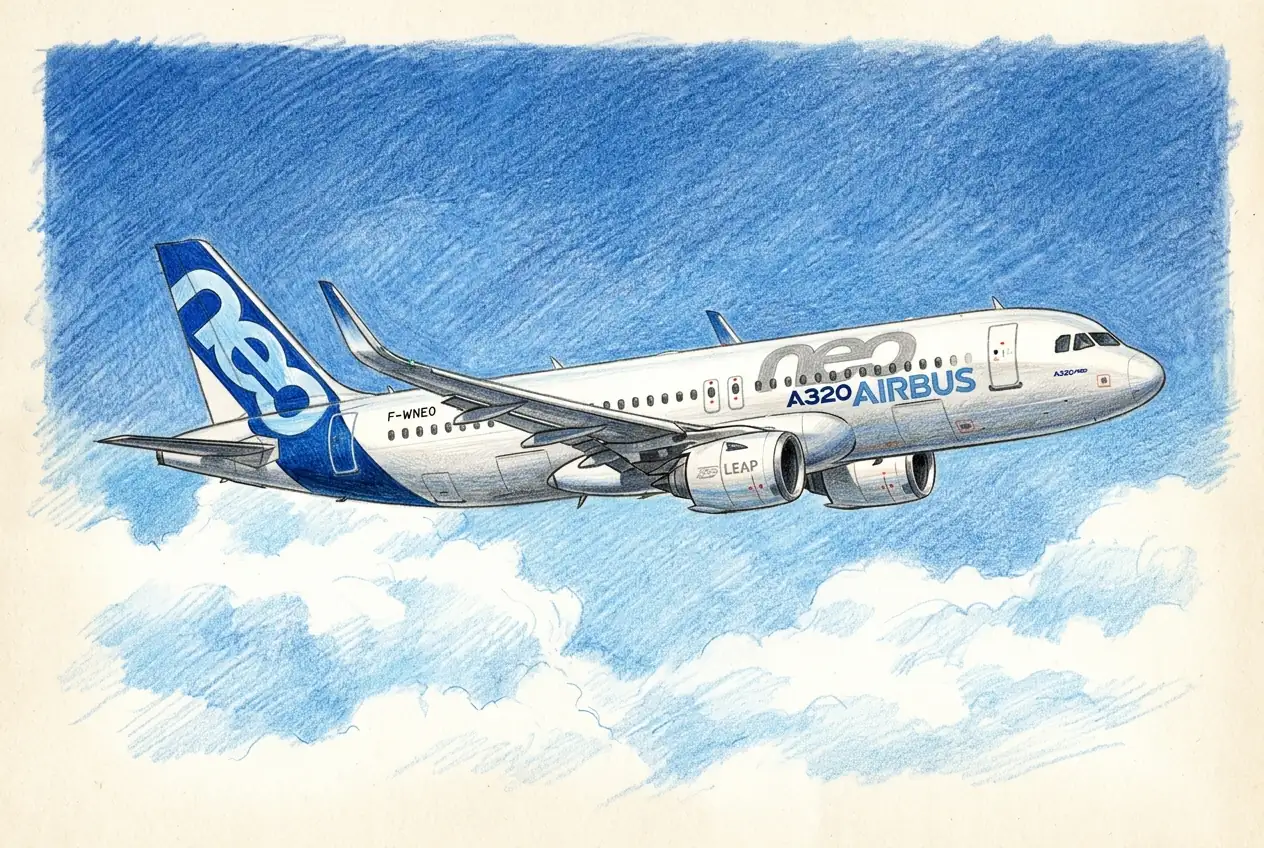
Shares of Airbus surged 4.5% to €179.48 after Europe's aviation regulator cleared the company's A320neo family — the world's best-selling narrow-body aircraft — to fly with Pratt & Whitney's upgraded engine, removing the last regulatory hurdle before airlines can begin receiving planes with the new powerplant. The question now: does a better engine actually solve the production delays that have capped Airbus's growth?
• A Four-Year Engine Fix Finally Clears Its Last Hurdle
Pratt & Whitney disclosed EASA's approval on April 17, saying it paves "the way for production engine deliveries and entry into service" this year.
The program began in late 2021 and received U.S. FAA certification in February 2025. For Airbus shareholders, the significance is simple: the upgraded engine can deliver up to double the time on wing — meaning planes spend far less time in maintenance shops and more time flying revenue routes. That directly improves airlines' economics and makes the A320neo a stronger sell against Boeing's 737 MAX.
• The Old Engine's Reliability Problems Were Dragging Airbus Down
The original engine delivered strong fuel efficiency gains but faced durability challenges in service, including issues that led to increased maintenance and aircraft groundings.
Groundings reached a record high in late 2025, with almost 550 aircraft inactive.
Airbus CEO Guillaume Faury publicly blamed Pratt & Whitney, saying its "failure to commit to the number of engines ordered by Airbus is negatively impacting this year's guidance." The upgraded engine is engineered to fix those weak spots — a critical step toward restoring delivery momentum.
• Production Is Still the Bottleneck — 870 Deliveries Targeted for 2026
Airbus has curtailed its ambition to reach 75 narrow-body jets per month, with CEO Faury resetting the target to end-2027.
The company guides for roughly 870 commercial aircraft deliveries this year, up from 793 in 2025.
Pratt & Whitney plans to slowly ramp production of the new engine variant until it becomes the sole version delivered in 2028. That gradual shift means relief is real but won't be instant.
• A Massive Backlog Underpins Long-Term Demand
Over 2,700 aircraft with this engine family have been delivered to more than 90 customers, and total orders exceed 13,000 engines.
RTX is investing nearly $1 billion in North Carolina and $200 million in Georgia to expand capacity. For Airbus, a more durable and efficient engine strengthens its pricing power and backlog conversion — but only if production can keep pace with demand. The stock's rally prices in optimism; the delivery ramp will determine if it's justified.