
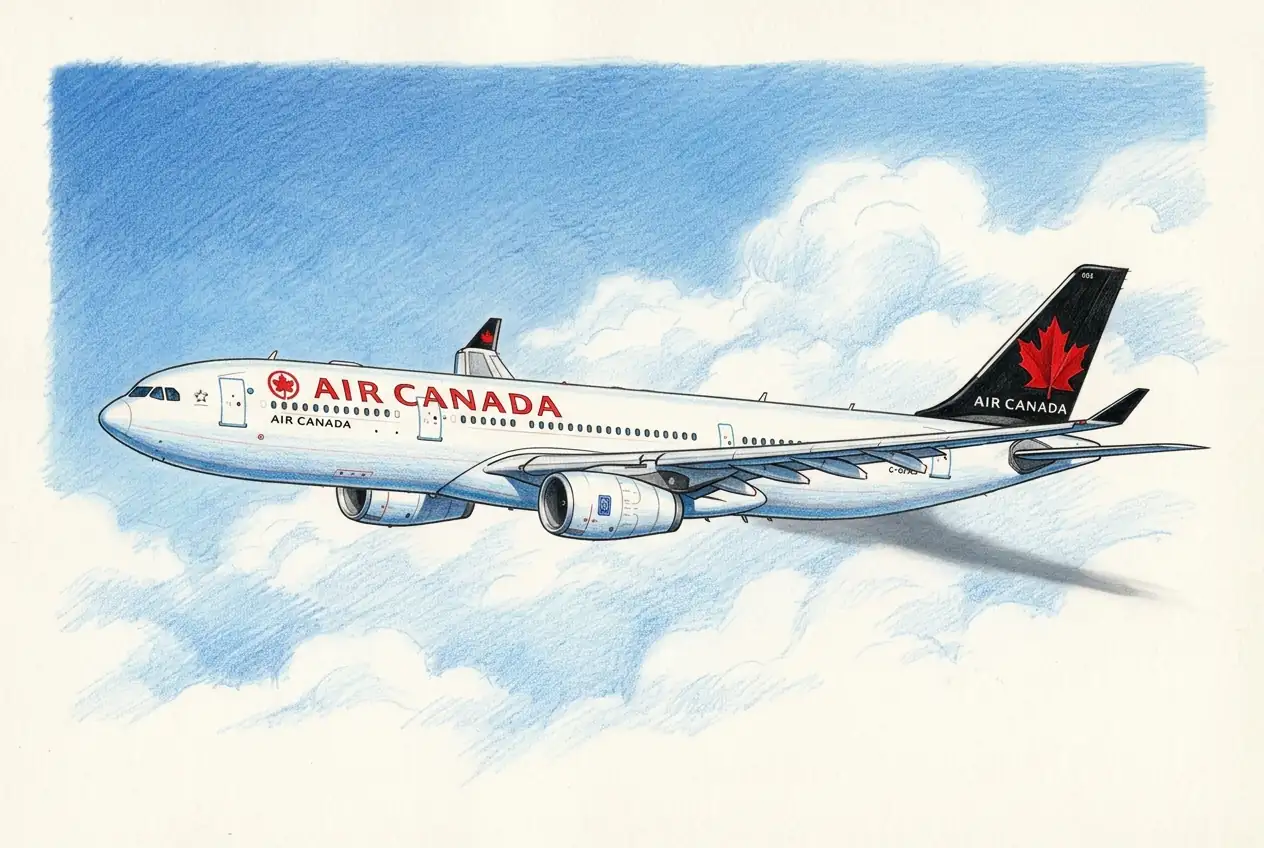
Shares of Air Canada surged 6.5% to $29.04 on August 12 after the carrier delivered a one-two punch: a blockbuster deal to sell a quarter of its Aeroplan frequent-flyer program and a quarter that crushed analyst expectations. The combination signals a company racing to shed its pandemic-era debt load — but investors now must decide whether the stock's sudden jump already prices in the good news. Air Canada Sells a Slice of Its Crown Jewel and Crushes Earnings — But Is the Loyalty Program Now Worth More Than the Airline Itself?
Shares of Air Canada jumped 6.5% to $29.04 after the carrier simultaneously revealed a landmark deal for its frequent-flyer program and quarterly results that blew past forecasts. Together, the announcements rewrite the investment case for Canada's largest airline — though significant risks remain beneath the surface.
• A $10 Billion Price Tag on a Rewards Program Changes the Math for the Whole Company. The deal values Aeroplan at C$10 billion — roughly 1.6 times Air Canada's entire market capitalization as of June, which stood at C$6.13 billion. In other words, outside investors led by Blackstone, La Caisse, PSP Investments and BC Investment Management are saying the loyalty business alone is worth far more than what the stock market had been assigning to the entire airline. Scotiabank analyst Konark Gupta noted the deal implies a "significantly higher value" for the loyalty business than the market had priced in , prompting an upgrade. That valuation gap is the single biggest reason the stock is rallying.
• The Debt Wall Gets Smaller, and Shareholders Get Cash Back. Proceeds will repay an upcoming US$1.2 billion bond maturity, with most of the balance funding up to C$800 million in share buybacks.
Air Canada keeps full operational control of Aeroplan , so day-to-day revenue from the program stays on its books. Management explicitly said "an investment grade rating is achievable in the mid-term." Reaching that threshold — where credit agencies deem a company a reliable borrower — would lower Air Canada's interest costs on billions in remaining debt, a meaningful boost to future profits.
• Record Revenue, But Fuel Costs Are Eating Into the Bottom Line. Adjusted earnings per share came in at C$0.40 versus the C$0.13 consensus, on record revenue of C$6.27 billion. Yet dig deeper: higher expenses, including a sharp increase in fuel costs, pushed Air Canada to a C$178 million net loss versus net income of C$186 million a year ago. Adjusted EBITDA — a proxy for operating cash flow — hit C$719 million despite a 49% year-over-year surge in fuel expense. The airline is growing the top line but spending heavily to do it.
• The Stock Still Trades Cheaply — If You Believe the Turnaround Holds. Air Canada's enterprise value sits at just 3.96 times trailing EBITDA , a bargain-bin valuation for a carrier posting record revenue. But a C$215 million operating loss and substantial remaining leverage mean the balance-sheet cleanup is necessary, not optional. Investors betting on further upside are essentially wagering that disciplined debt paydown and the newly validated Aeroplan valuation will pull the stock closer to what the sum of its parts is actually worth.